
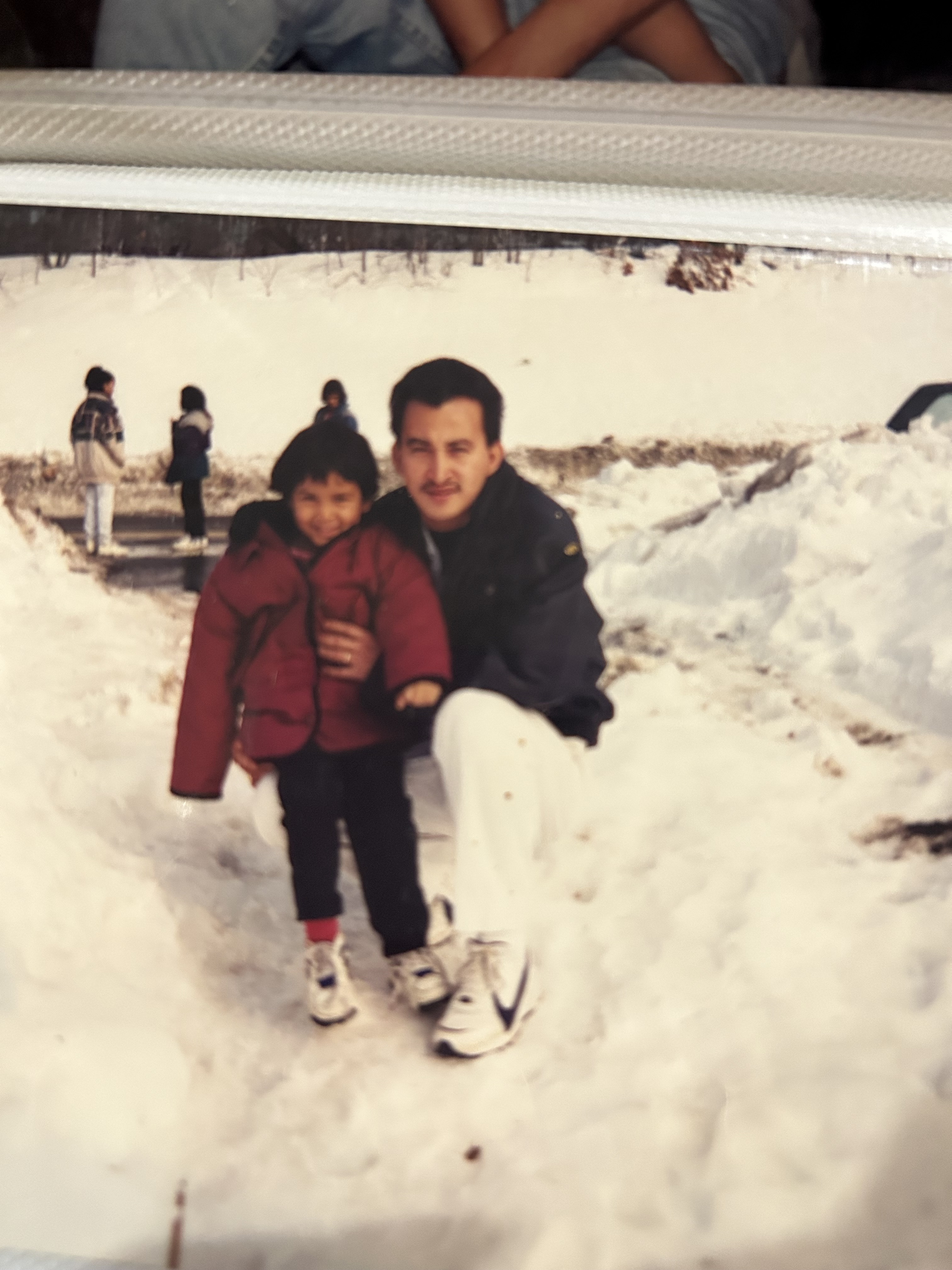
My father, Antonio Contreras, immigrated to the United States at the young age of 18. He grew up in San Miguel, El Salvador, a young and handsome man. They say he was charming, popular, well-dressed, and funny—the quintessential Gemini. In their small, underdeveloped village, my dad’s family was known for owning a small land for crops and farming. As my father often says, “Everyone knew who my dad was in the village.”
My grandfather, Reyes Contreras, was a man of great character—hardworking and deeply devoted to his family. He inherited land from his father and worked tirelessly to expand it. By the time he passed, he had left each of his seven children a plot of land where they could comfortably build homes and raise families of their own.
My dad often shares stories of his childhood in El Salvador in the 70s, before the civil war tore through the country and shattered its spirit. He remembers a time when life was simple, joyful, and comfortable. He’d roam the villages, dressed in his best outfits and leather loafers, heading to the nearby dances. I think when you live in that kind of poverty, you learn to cherish everything you have, because you haven’t yet seen what more is out there. My father had yet to dream another dream.
But as tensions rose, the peace and joy of El Salvador were slowly consumed by unrest. The stark economic disparity, where a small elite controlled most of the land and wealth, leaving the majority in poverty. The growing influence of both leftist and U.S. ideologies ignited a devastating civil war. The smallest country in Latin America became the battleground for a 12-year conflict that would change its history forever. The Salvadoran Civil War, lasting from 1979 to 1992, saw the government, backed by U.S. aid (driven by their fears of communism spreading in Latin America), waging war against left-wing guerrilla groups, who were fighting for the rights of everyday people.
The violence of the war and the selfishness and greed of politicians and revolutionary groups reached into every corner of life, leaving no one untouched. Personally, I don’t agree with either side. Doing evil in the name of good will never make something right. I believe in human rights, and anything that leads to violence or cruelty against any human being is corrupt in nature and spirit. My father was just a boy when the war erupted, and he recalls how fear and unrest became a way of life. But in his youthful innocence, he didn’t fully grasp the gravity of the situation, until the day everything changed.
At 17, while walking to a dance with his friend, my dad was stoped by a military vehicle. Soldiers kidnapped the boys and forcibly enlisted them into military service. He rarely speaks about this experience, but it changed him forever.
His younger brother, Sosimo, who had voluntarily enlisted at 16 (yes, 16 years old), was also training for battle. During that time, my dad recalls that the military initially recruited young boys in secret. Some willingly joined either side, while those who remained neutral did their best to avoid recruiters. However, as the conflict escalated, the military abandoned secrecy and began forcibly drafting young boys into service. My uncle Sosimo, though younger, was the fearless, macho type. By the end of their training, he had passed every test. My dad, on the other hand, was more tender-hearted. The weight of it all, wielding a weapon, the possibility of taking a life, or losing his own life, was unbearable for him. Honestly, how could it not be? Forcing a 17-year-old to commit violence. Overwhelmed by fear, my dad became so sick that he was sent home, told only to rest, because if needed, they would come back for him.
Meanwhile, my brave uncle, just 16 years old, went into battle. Within a month, his life was cut short by the cruelty and selfishness of those in power. Isn’t that the fate of so many innocent lives? The deep pain and loss inflicted by a handful of individuals who believe they have the right to decide the fate of entire nations. They manipulate the ignorant into fighting wars that serve only the wealthy, conspiring to keep the people down and oppressed. But the worst was yet to come. When my uncle Sosimo’s body was found, the military didn’t honor him with a proper burial or any recognition for his service. Instead, they took his 16-year-old body and tossed it onto my grandmother’s front steps. They knocked on the door and coldly informed her, “Here is your son. Thank you for his service.” That moment broke my father.
After my uncle’s death, my grandmother looked at my father, and my younger uncle, just 13, called my aunt and said, “The boys need to go north immediately.” She feared for their lives as it was becoming increasingly dangerous for able-bodied men and boys to roam freely without choosing a side in military service. With that, my father left everything he had ever known, his family, his home, his country, and began a new life in the United States.
The trauma of those years left deep scars on both my father and uncle. My father struggled with PTSD and addiction throughout much of his young adult life. My uncle, torn from his parents at such a tender age, could never move past the pain of abandonment or the addiction that followed. My sweet uncle, a sensitive Pisces, remained stuck in his suffering.
This story always brings me to tears because of the deep empathy I feel for my father. Despite his struggles, he found a way to move through his trauma and live a life of sobriety. It took and affected much of my childhood, but he persevered. I’m proud to say that my dad, who could never hurt a fly, eventually became a U.S. citizen. I’ll never forget the day he was sworn in by a Supreme Court judge. It was during his citizenship case that I learned the full extent of what he’d endured and lost.
With the current state of the United States, the hatred I see toward immigrants and the fear so many have of those simply seeking a better life. I can’t help but wonder: where is people’s empathy and compassion? It feels like hatred has grown so loud and bold. So many discriminate against lives and experiences they could never understand, let alone survive themselves. They project ignorance, unaware of the depths of suffering that force people to leave their homes and seek refuge. Often in the very country that planted the seeds of their unrest. My father is a U.S. citizen now, and I remember how much of an accomplishment it felt when he swore in. Reflecting on his incredible story, I’m in awe. Raised in poverty few could imagine, surviving a civil war, and arriving in a country where some blame people like us for their own misery—he never stopped working hard to provide for his family and build the American Dream.
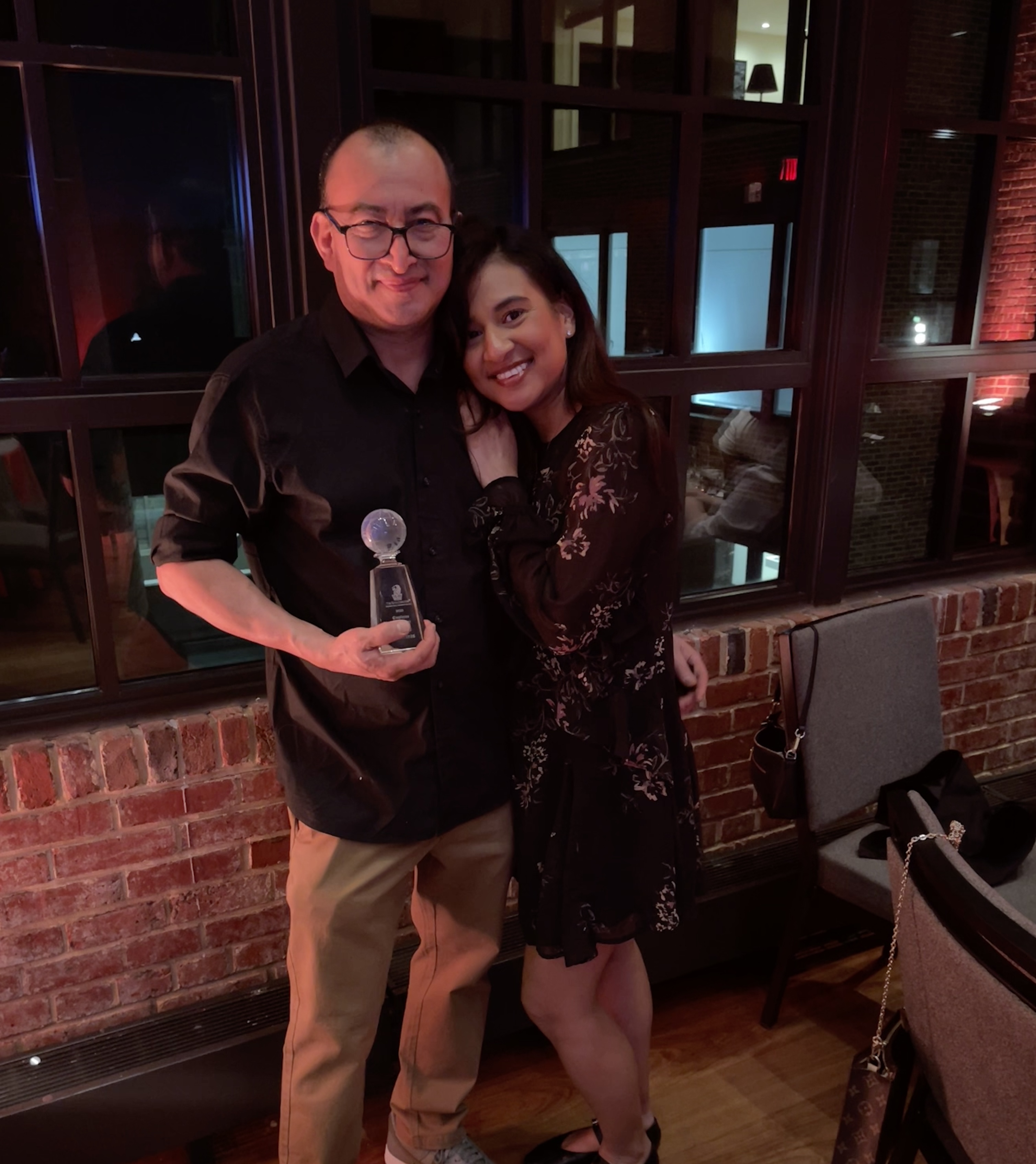
Recently, I had the chance to celebrate my father at the job he’s held for more than 25 years, as Employee of the Year. I saw how his coworkers and colleagues doted on him and his dedication to striving for the best work. They told me, ‘When Antonio cooks for the staff, whispers spread through the hotel “Did you hear Antonio cooked?” and everyone rushes to the kitchen to get a taste.’ He raised me reminding me, no matter where you work, always do your best, and with a good attitude. Enjoy what you do. Maybe I haven’t always grasped the fullness of his words, until now.
I sometimes fear that all the sacrifices my parents have made, all the struggles they’ve endured to survive and change the course of our lives, will one day be for nothing. More and more, people remind us that our existence causes them some deep, internal discomfort, blaming us for their unhappiness. I feel sorry for them. How could you live a life with so much hate, weighing down on your chest like that? I really do hope they heal, find clarity and put down the pride and fear. The country that was once a dream come true is beginning to feel like a slow nightmare. I really hope that’s not the case. This place has been the only home I’ve ever known. It changed the course of my entire family’s life, and I hope the pride and joy of being American doesn’t become just a fleeting memory.
I love my dad’s story. I love his bravery, his resilience, and the way his journey reflects the ups and downs of simply being a human being.
I hope you leave a little more inspired.
XOXO,
Blanca
Don’t forget to subscribe below to receive email notifications for my next blog post! Or, if you prefer, follow me on Instagram where I post updates for every new blog entry!


 A Little More Inspired
Leave a comment