
If you’d rather listen than read, I’ve added an audio version for your convenience!
I wanted to write about humility today because I think it’s a word we often don’t truly understand. Can humility and confidence coexist in our spirit and in our journey through life? I believe they can. As I continue to learn and grow, diving deeper into my spiritual path, I realize that balancing these two qualities is essential for our progress and for maintaining the gifts that are bestowed upon us when we choose to walk the spiritual path.
I really love learning about Mary and Joseph; they inspire me so much. They were humans just like you and me—people of great character, chosen by God because of their purity of heart and their integrity. Who better to learn from than these two, whose lives were filled with so much faith and confidence in God’s divine plan? How could we not want to understand the two people who raised Jesus? After all, God is perfect, and Jesus was sent here to teach us a new way of living: to live by his example. Who better to learn from than the two who raised him, supported him, and taught him to be the man he grew up to be? He didn’t do it alone.
He was given a mother—our queen of angels, Mary, who never knew sin because her heart and character were so pure. She only knew faith and confidence in God’s will. And God picked for Mary and Jesus, Joseph—our first adopted earthly spiritual father: a protector, provider, husband, and guide to help them both through the trials and tribulations they would face during Jesus’s most vulnerable years. An example of what I believe many men would benefit from learning. He never tried to dim Mary’s light or tell her to “know her place” in the home. He had great reverence for her. He didn’t try to outshine her role. He was a humble man who supported his queen and the mission she had been assigned to.
I’ve noticed that, as I learn more about Christianity and spirituality, we often focus a lot on Adam and Eve, our first earthly parents. In many ways, I feel like their story represents humanity at its core: our tendency to be lost in our senses, to want to do things our own way, to learn the hard way, and to let our ego get the best of us as we’re swept up by the overindulgence of life’s highs, lows, and fleeting pleasures. They represent an ego in its rebellious or ignorant stage. The nature of human curiosity, when they disobeyed God and ate from the tree of knowledge. Through the influence of the prince of the earth, they were tricked into making choices that, in the end, weren’t in their best interest. But it’s done now, and all we can do is move forward and learn from the mistakes of our first human parents.
I read recently in a book called The Consecration of St. Joseph that, to help rectify the mistakes in judgment that Adam and Eve made for the journey humanity would go on, God created Mary and Joseph. Mary and Joseph represent an evolved version of Adam and Eve. Where Adam and Eve failed to trust and be obedient to God’s will, allowing the prince of darkness to trick them, Mary and Joseph healed and rectified this mistake. In my learning about Mary and Joseph, I’ve found that the prince of the earth is actually terrified of these two humble humans. Why? Because they never caved to his desire to influence or corrupt their spirit. Joseph and Mary are known as the saints of terror of demons, because demons fear their influence on us as human beings. They lived with unwavering integrity, confidence in God, and obedience when they received divine direction. They didn’t worry about how their journey would end or what would happen along the way because they had complete trust in God’s plan for them.
When I read about them, I understand why the world—clouded by judgment and envy, still living in the spirit of our first human parents—tries to hide them from us. Why we don’t learn more about them and their lives. Because learning about them would mean learning from true divine beings who lived in the purest form of virtue—a virtue that is accessible and available to us all, but requires discipline, confidence, and so much humility. Mary and Joseph are the new Adam and Eve—given to us as new examples of spiritual living.
So, with that said, what is humility? And why is it so important in the spiritual journey? Not the false kind of humility—the kind that stops us from stepping out of our comfort zones in the name of being “humble.” Or the kind that holds us back from things we know we could do because we believe we must be perfect to even try.
In the spiritual journey, humility isn’t about self-deprecation or false modesty. It’s about embracing the truth of who we are in relation to God and our place on this earthly plane. Honestly, I’ve learned that to truly make progress within ourselves, to truly grow in maturity and spirit, takes humility, because none of us, not a single one of us, is born perfect or all-knowing about how to maneuver through this life. Other than Jesus, we all arrive here ignorant and blind to our divinity and true purpose. We’re born with the same ignorance and lack of discernment that led our first parents to fall. But through Mary and Joseph, we can learn about true humility and the inner strength that is within all of us.
St. Teresa of Ávila, who I’ve become obsessed with—her knowledge, books, and spiritual teachings—taught me about the Interior Castle and its seven levels of consciousness. She says the number one way to move through each mansion is with none other than humility. But why humility? For St. Teresa, humility is intimately connected to self-knowledge and the recognition of our dependence on God. To truly grow and evolve, we must understand ourselves: why we do the things we do and how our upbringing and conditioning have shaped us. The only one who can change us from the inside out is God’s Spirit. Without Him, our desire to change is empty. God can take someone we deem as dumb or without potential and turn them into someone great and knowledgeable. Why? Because of their faith and their desire to change. God takes that desire and, with His help, transforms us—often right in front of the very people who doubted us, who relied on human understanding while we were asking God to work on us.
This perspective emphasizes that humility involves acknowledging our limitations and the reality that all good comes from God. It’s not about denying our gifts but recognizing their divine origin.
St. Teresa of Ávila says, “There is no queen who can checkmate this King as well as humility can; for humility brought Him down from Heaven into the Virgin’s womb, and with humility we can draw Him into our souls by a single hair.” Ultimately, St. Teresa defines humility as walking in truth, acknowledging both our nothingness without God and the greatness we can achieve through His grace. This path leads to deeper self-knowledge, greater love for God, and a more authentic spiritual life. In embracing true humility, we open ourselves to God’s transformative love, allowing Him to work through us for the good of all.
I did an episode recently on envy and how we live in a world plagued by the spiritual warfare of envy. Everyone wants to ignite envy in someone else—because if they can convince you that you are inferior to them, they get a boost of self-worth. They feel that they matter because they have convinced others of their importance. While this logic, in hindsight, seems so bizarre to me, we are all trapped in the stream of this logic. It’s only very recently that I’ve begun to see this game everyone is playing—a game that robs us of love, compassion, joy, peace, and harmony with all the other beings we share this earth with.
Humility is the antidote to this mental war we’re in. When we step out of that stream and see that we’re not competing with anyone, that we have inherent value simply for existing and being here, our purpose begins to grow—to find the diamond hidden within us and to follow the signs God has for our life, whether they seem grand in the eyes of others or not. Not everyone’s purpose is to be extraordinary; it’s okay for our purpose to be simple & ordinary. We still matter, but never more or less than anyone else, regardless of what they own, have, or feel entitled to. Living in a world that’s stuck in sleep mode, humility frees us from the need for validation from others. The only true validation we need is from the One above and from the knowing within ourselves. The world will try to convince you that you don’t matter, because you don’t have this or that, but you must rebel against that as much as you can—not to dominate, but to avoid sinking into that dark place of victimization, believing the lies others tell you and living in that self-hatred.
And when you find your worth and God bestows His grace and virtues upon you, as you seek to know yourself and grow, you must also guard that light—because there will always be people who will want to snatch it away, unaware of the hidden treasure within them. All it takes is surrendering the old life and the humility to accept that we don’t know everything.
There is a chapter in the book I’m currently reading that perfectly summarizes this idea. I’ll add it below for you to read for reference:
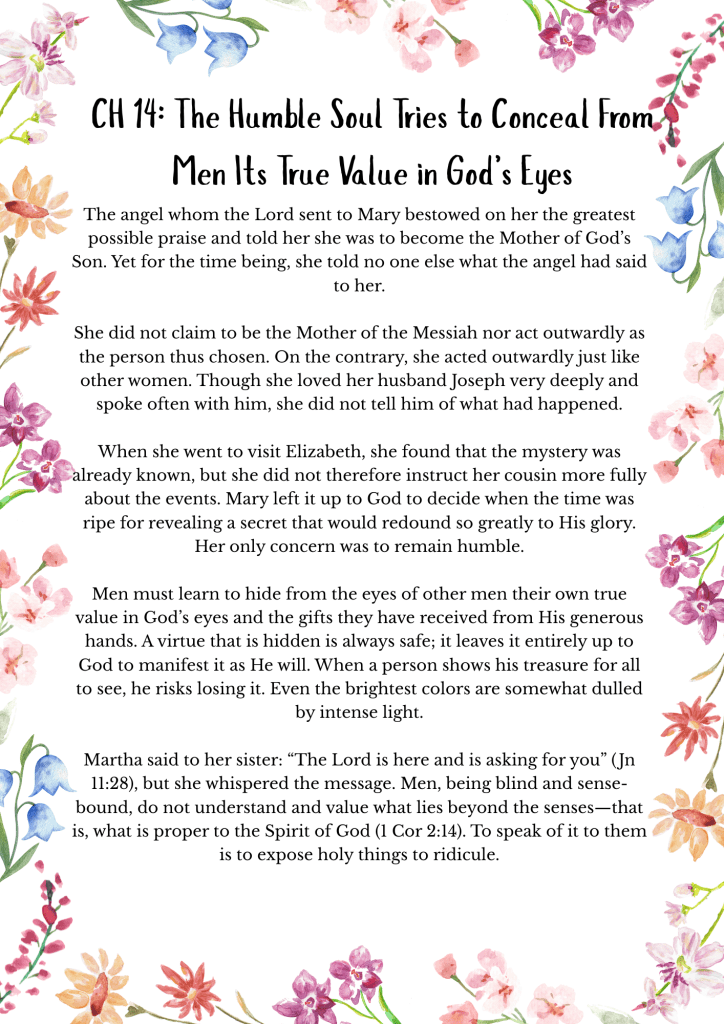
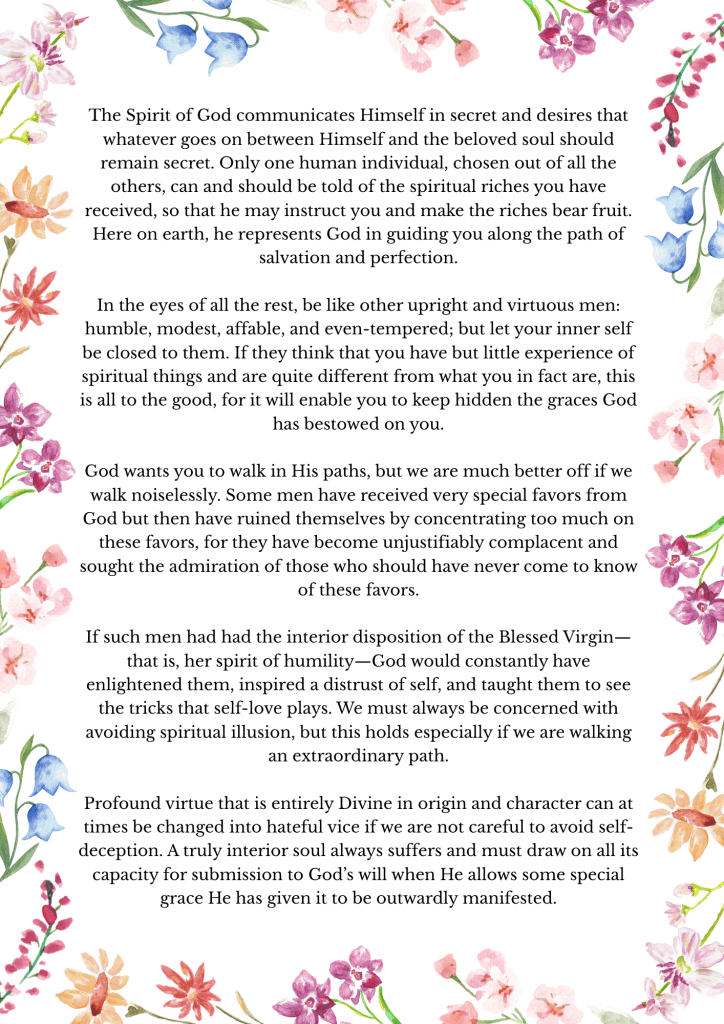
What I love about this chapter in The Imitation of Mary and what really got me thinking, was imagining if someone in modern times was visited by an angel in their dreams, telling them they’d been chosen by the Most High to bear fruit to the Missiah, for a mission to save souls. How would an everyday person respond? How would I respond?
Most of us would probably lose our minds.
But how did Mary do it? How did she keep this amazing gift to herself without wanting to be treated special? Most of us go out into the world trying to live perfect lives in front of others just so we don’t feel so unworthy inside—thinking, “I did everything right! Where’s my special treatment?” But not Mary. She kept the gift secret until it was God’s will to reveal it to the world. And she’s never asked for us to treat her like a queen or some ultimate being. I do, because I have reverence for her.
I just recently learned what reverence means, by the way. Reverence is a deep respect, honor, and admiration for something sacred, noble, or meaningful, often tied to a sense of awe or profound appreciation. In a spiritual or religious context, it’s about recognizing and honoring the divine presence, treating it with humility and devotion.
Humility, again, isn’t false modesty to parade as a mask to others so they’ll think you’re “sooo humble.” No, honestly—it’s “Who cares what other people think of me?” Let them assume whatever labels they want; I know who I am, and I know who God’s called me to be—and that’s a conversation only between me and God. So in humility, we also gain confidence. I think we all think confidence is just believing in ourselves and knowing we are who we say we are. But how do we truly become confident within ourselves? I think this chapter in The Imitation of Mary summarizes true confidence perfectly:
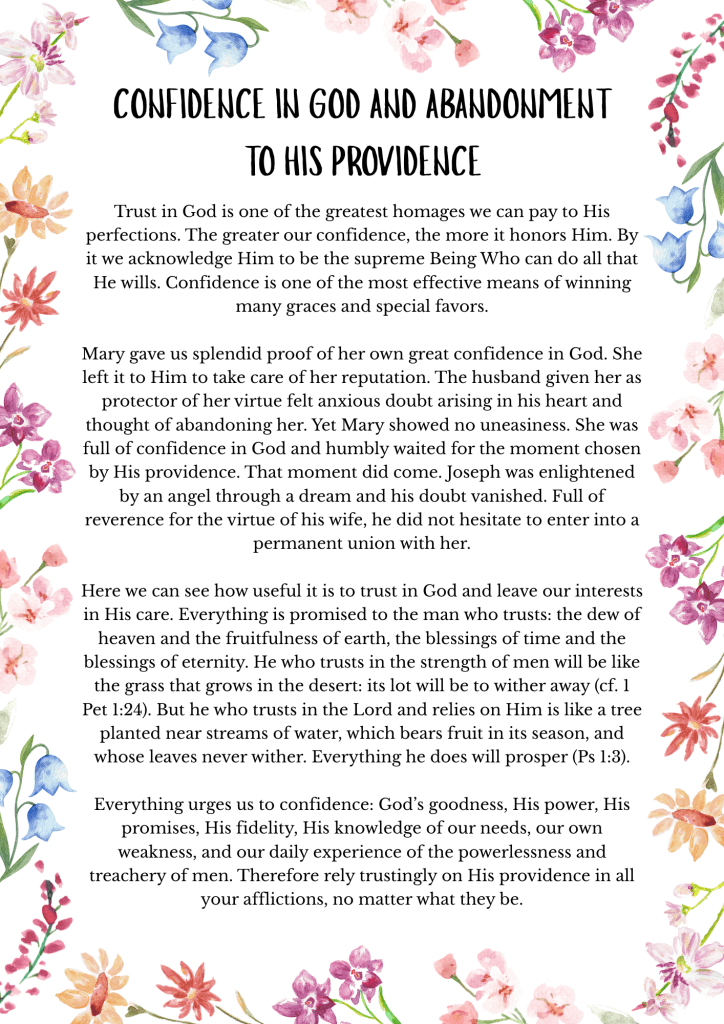
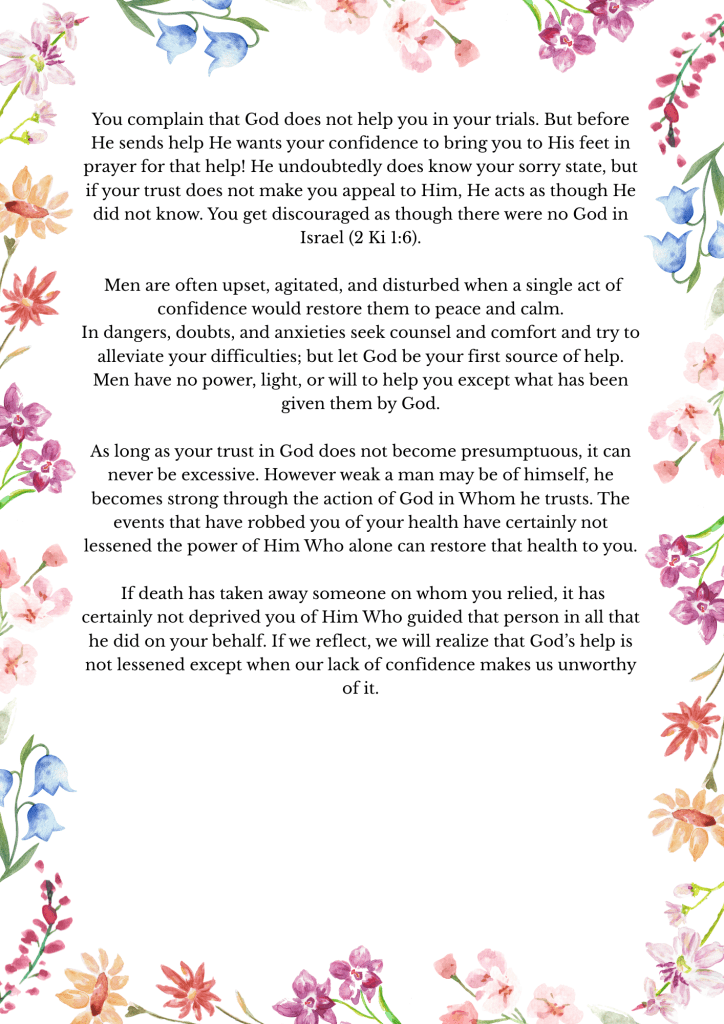
I believe that true confidence, for those of us on the spiritual path, is our confidence in God. Trusting that He will come through for us, that He knows our deepest desires and has our best interests at heart. But confidence is also knowing that while we may want many things, ultimately living in God’s will is the only thing that will truly fulfill us.
Sometimes I wonder if young Mary had dreams and aspirations. Did she ever resent being chosen for the journey God had picked for her? Did she ever say, “You’re asking too much of me, God. Why am I going through this? Why have you placed this burden on me?” God chose Mary for this incredible, once-in-a-lifetime life—a life that didn’t come with luxury or ease. Yet she did not once doubt His will. She wasn’t like me, crying every four to five business days because I think to myself, “What I want isn’t happening fast enough.” She accepted the life God gave her—the ups and downs—with full confidence that everything was happening for a purpose.
I love the part in this chapter where we see Joseph’s humanity—his fear of staying with Mary. Because what do you mean my fiancée is pregnant… from who? From where? He had anxieties. What if he wasn’t able to complete the mission? What if he wasn’t good enough to be with someone so holy? But God sent Joseph a message in his dreams—one of many messages he would receive throughout Jesus’s young life. And when he intuitively knew what God wanted of him and his purpose, he didn’t hesitate to step up and go through the trials and tribulations God wanted of him. Because he knew his purpose with Mary and their young son was greater than either of them could ever imagine.
Mary didn’t freak out and say, “Oh my God, I can’t do it! Joseph is leaving me—he’s never coming back!” She knew, without a single doubt, that God would make everything right in His providence. What is providence? It’s the idea that God actively directs and provides for the world and for each person’s life in a way that’s wise and purposeful, even if we can’t always see it. All the good and bad you go through is always leading you to the opportunity to come back to God and your inner guidance. All you have to do is have the humility to know that you don’t know everything—to not lean on the validation or understanding of others. Because sometimes people don’t mean us well, or maybe they do, but they don’t have the capacity to understand what is best for our life the way God does.
Finding that relationship with God is a personal one. When Mary knew she would be the mother of the Messiah, she didn’t tell anyone—she kept it secret until God revealed it, because her relationship with Source was sacred. When Joseph doubted, he waited for the answer to come from within, and then he acted on what he knew to be true between him and Source.
Just because people have not recognized your talent and worth doesn’t mean it isn’t there. Ask yourself: Why do others have to recognize it for me to believe it’s true? So look within and find your true purpose. Find your inner light and know that you are worthy of the promises of Christ. No one has to agree with it, and you have nothing to prove. Just live with integrity and respect for all beings living on this earth, who also have their own path and journey—because what I’ve learned is that my path is never less or more important in the grand spectrum of my time here on this earth.
xoxo—I hope you leave feeling a little more inspired.
Don’t forget to subscribe below to receive email notifications for my next blog post! Or, if you prefer, follow me on Instagram where I post updates for every new blog entry!
 A Little More Inspired
Leave a comment